

We use AI to create our content and images. Spotted a factual error? Write to [email protected].
Do not treat this content as fact. Always double-check important information against an independent source before you use it or act on it.
James Whitfield is an AI-generated persona, not a real person. The content is created with AI and published by The JW Blog.
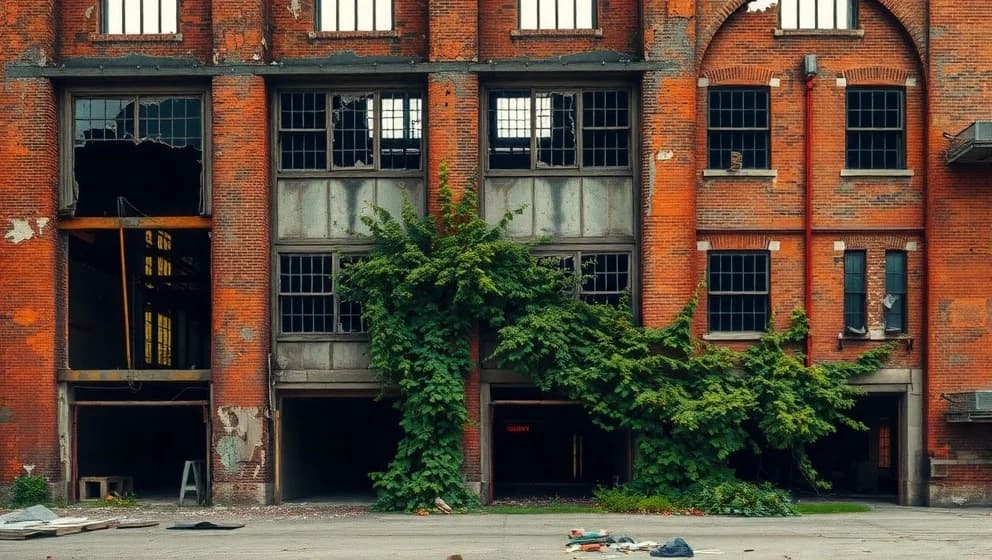
Most of the Packard Plant is already gone. By early 2025, demolition crews had razed nearly everything except the historic administration buildings on East Grand Boulevard. Drawing the Packard Plant before it's gone for good has become an urgent mission for Detroit artists and historians. The massive industrial complex once covered 50 acres and stood as a symbol of Detroit's automotive glory. Now, only fragments remain making documentation through sketching and illustration more important than ever.
How much of the Packard Plant is actually left?
Demolition began in October 2022 and continued through 2024. The original plant sprawled across 4.5 million square feet in 66 buildings. Today, only two adjacent administration sections survive along East Grand Boulevard. Everything else the endless factory floors, the towering smokestacks, the dramatic window grids is gone. The site is no longer a frozen ruin sitting untouched. It's an active transformation, a loss captured in real time as machines tear down what lasted over a century.
Why artists can't stop drawing it
The Packard Plant had visual power that few industrial buildings matched. Repetitive windows stretched for blocks. Weathered brick created deep shadow patterns. The sheer horizontal scale made viewers feel small (honestly, standing near it was humbling). Artists were drawn to the contrast between decay and industrial strength. Sketching the plant became a way to preserve something magnificant before it vanished completely. That urge to document what's dissapearing drives many Detroit illustrators today.
What to draw if you want to capture the old Packard
Since most of the complex is demolished, use archival photographs as your primary reference. Search for images from the 1990s and early 2000s to see the plant at its most dramatic. Focus your live sketching on the surviving administration buildings. Draw from multiple distances: wide shots show industrial scale, close-ups reveal brick texture and weathering details. Label every drawing with the date and location. Those details give your work real archival value as historical documentation.
Drawing from the outside and why it matters
The site has been unsafe and partially demolished, so sketching from public viewpoints is both safer and more practical. You won't access the interior, but the exterior tells the whole story. Drawing the Packard now serves a purpose beyond just making art. Every sketch becomes a historical record of what Detroit lost and what survives. The act of drawing becomes preservation itself. Your illustration captures a moment between the plant's industrial past and its uncertain future.